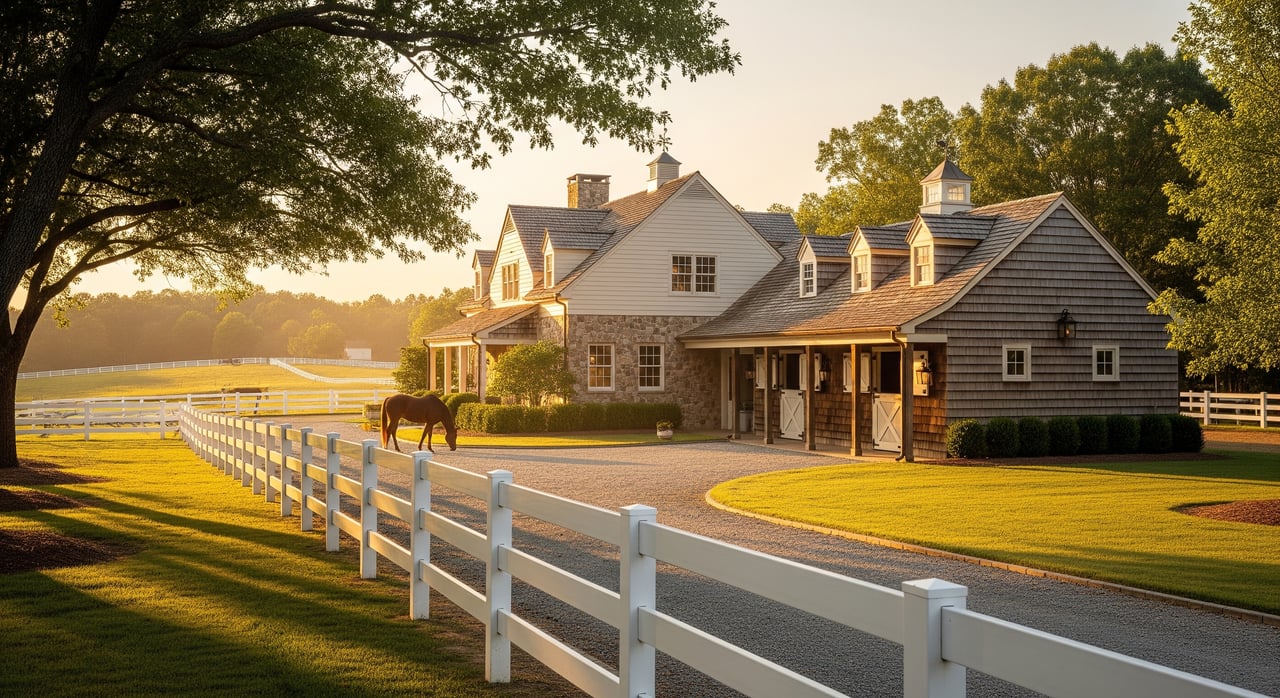
How Milton's Equestrian Lifestyle Shapes Home Values
February 5, 2026
February 5, 2026
Are you drawn to Milton’s horse-country feel or wondering why some homes on acreage command higher prices? If you are buying or selling in Milton, understanding how equestrian features influence value can change your strategy and your outcome. You want clarity on what buyers pay for, how to price land and improvements, and how Milton compares with nearby suburbs. This guide breaks it down so you can make confident decisions. Let’s dive in.
Milton is known regionally for a rural and semi-rural character that includes larger residential lots, private barns, arenas, polo fields, and a supportive equestrian culture. That identity sets it apart from denser North Fulton communities. The result is a distinct market dynamic where acreage and equestrian capability often carry a premium.
Local land-use policies play a key role. Zoning districts with larger minimum lot sizes, rural preservation tools, and rules that address equestrian uses help protect the area’s character. When combined with bridle and trail access, low-traffic rural roads, and nearby equestrian facilities, you get a lifestyle that is both feasible and desirable inside a major metro area. That mix of access and space is rare, which is why it matters for value.
Buyers pay for lifestyle and function. If you want room for horses, a barn, turnout, or simply the privacy and aesthetics of a country setting, Milton delivers. That demand comes from professional and hobby riders, privacy-focused estate buyers, and those relocating from rural markets who want acreage without sacrificing regional access.
Scarcity heightens the effect. There are only so many large-lot, equestrian-capable parcels close to Atlanta’s job centers. When supply is limited, competition can push prices higher on a per-parcel basis. Many buyers also weigh commute and school considerations alongside the equestrian lifestyle, which can further support demand.
On the supply side, larger minimum lot sizes naturally limit how many homes can be built. Fewer lots mean slower inventory growth when demand rises. Equestrian improvements also cost more to build and maintain. Barns, arenas, fencing, proper drainage, and systems like septic or well represent meaningful capital and upkeep, and those investments influence pricing.
Site conditions matter too. Soil percolation for septic, stream buffers, and topography can reduce usable acreage. Covenants, easements, and other restrictions can limit future subdivision, preserving value but affecting flexibility. All these factors shape how both buyers and sellers approach price.
Not all acreage is equal. Buyers focus on usable pasture and functional improvements more than raw size. Features that typically increase buyer interest include:
If structures are dated or in disrepair, they can weigh on price or trigger repair credits. On the other hand, thoughtful upgrades, documented maintenance, and clean permit histories help support stronger offers.
Milton generally offers larger parcels and a higher share of estate and farm-style properties. Alpharetta, Roswell, and Johns Creek have broader mixes of housing that skew toward denser subdivisions and townhomes. If you need acreage or equestrian capacity, Milton often provides more options.
In denser suburban cores, buyers often compare homes by price per finished square foot. In Milton, price per acre and the quality of equestrian features play a larger role. A smaller luxury home in a nearby suburb may resell quickly due to broader demand, while a Milton estate can command a higher total price if the land and equestrian assets align with what riders and privacy seekers want.
Milton’s buyer pool is more niche. Many buyers accept rural infrastructure factors like wells or septic and longer drives in exchange for acreage. That can mean a narrower, but motivated, set of buyers. In nearby suburbs, demand often centers on proximity to offices, retail, and denser amenities, which can lead to faster turnover for conventional homes.
Many buyers consider public school options, commute times, and access to shopping and medical services when they compare towns. Milton prioritizes open space and rural character, so you trade some convenience for privacy and land. Be realistic about your routine and the amenities you need day to day.
Start by documenting what makes your property functional and desirable. Note the number and condition of stalls, tack and feed areas, wash racks, arena size and base, fencing type, water access points, and pasture layout. Clarify usable acreage versus total acreage, especially if streams or slopes reduce grazing or riding areas.
Compare to other Milton sales with similar acreage and equestrian capability, not just square footage. Price-per-acre benchmarks and the quality of improvements will tell you more than a generic subdivision comp. Pay attention to days on market for similar properties, and consider seasonality when you launch.
Professional staging, premium photography and video, and clear, feature-forward copy make a real difference. Equestrian properties show best when pastures are green and arenas are fully functional. If timing allows, target windows that highlight the lifestyle. A polished, accurate listing package builds trust and helps justify your price.
Beyond the home inspection, evaluate barns, arenas, fencing, and drainage. Confirm arena base and footing quality, stall dimensions and ventilation, and the condition of paddock gates and lines. Walk the land after rain if possible to assess water flow. Review soil and septic reports and verify well or water reliability if applicable.
Ask zoning questions early. Verify allowed equestrian uses, setback requirements for barns and arenas, and any limits on the number of animals. Check for conservation easements, deed restrictions, or HOA rules that affect future improvements. Understand whether subdivision is even possible before you factor it into value.
If inspections reveal deferred maintenance, negotiate seller credits or repairs for critical items like fencing, arena grading, or water systems. Consider escrow holdbacks when weather prevents immediate work. Align timelines with the riding season if it matters to your plans.
Build a forecast that includes both routine maintenance and reserves for larger projects like refooting an arena or replacing major fencing runs.
Acreage supports value when it is usable and brings the lifestyle to life. Thoughtful paddock layout, water access, and safe, well-maintained structures help. Connectivity to local riding options and equestrian services can also resonate with buyers. Clear zoning, good records, and the potential to expand facilities or add covered areas are positives. Restrictions that limit future flexibility should be weighed and reflected in price.
Selling or buying an equestrian property is not the same as transacting a typical suburban home. You need a plan that combines market context, accurate valuation of land and improvements, careful presentation, and skilled negotiation.
With a high-touch approach to listing preparation, premium photography and video, and negotiation-led advocacy, you can position your property with confidence or pursue acreage with clarity. The right advisor will segment comps by lot size and equestrian features, confirm zoning and use constraints, coordinate inspections for barns and arenas, and present a clean, credible package that supports your goals.
If you are considering a move in Milton, start with a private conversation about your objectives and the property’s unique attributes. The right strategy can translate lifestyle into measurable value.
Ready to talk through your options? Connect with Brandon Patterson for a confidential, one-on-one consultation.
Stay up to date on the latest real estate trends.
Brandon's goal isn’t just to help you buy or sell a house — it’s to guide you through a meaningful life transition with honesty, empathy, and precision. Whether it’s negotiating the best outcome, refining a property’s presentation, or simply listening deeply, his focus is always the same: your success and peace of mind.