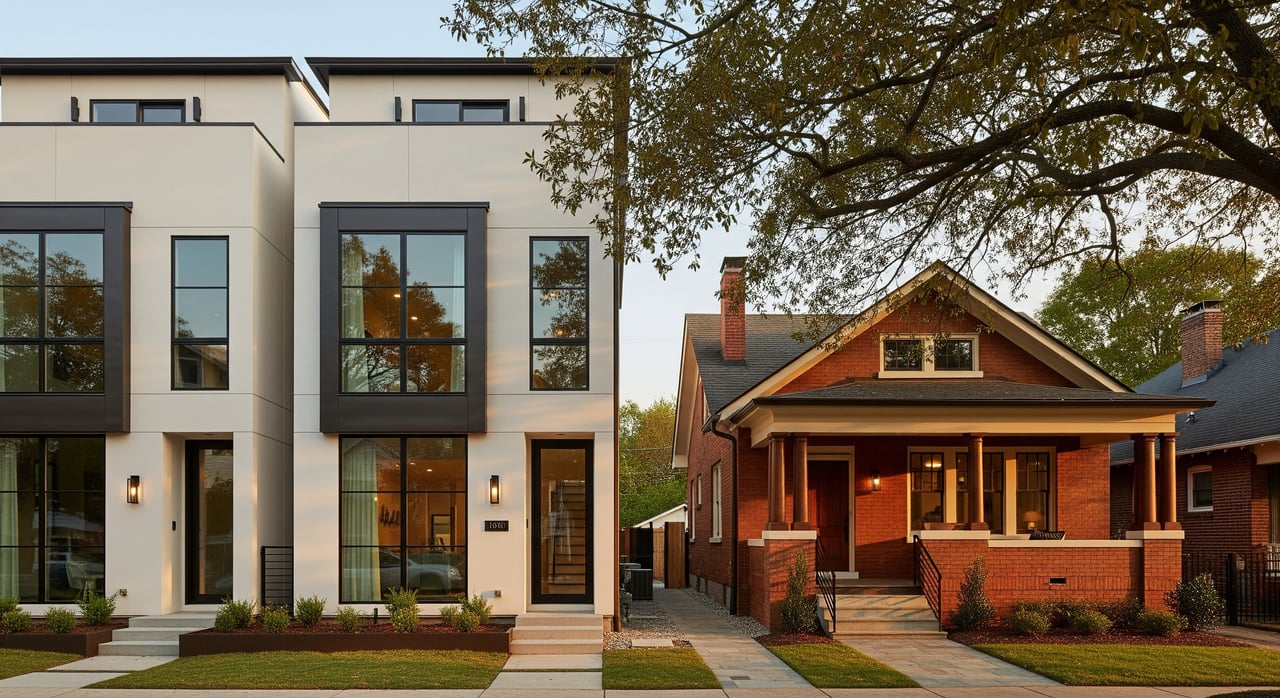
New Construction Vs. Resale In Chamblee
January 1, 2026
January 1, 2026
Are you torn between a sleek new townhome near Assembly and a character-rich renovated resale on a leafy Chamblee street? You are not alone. Choosing the right path shapes your day-to-day life, your budget, and your long-term return. In this guide, you will compare costs, warranties, walkability, and appreciation potential so you can make a confident, data-informed decision. Let’s dive in.
Chamblee in DeKalb County is transforming, with mixed-use growth near Assembly and steady renovation across older single-family neighborhoods. Proximity to the Chamblee MARTA station and major routes makes address-level location a key driver of pricing and demand. The area includes several micro-markets, from downtown’s walkable corridor to quieter detached-home streets and the Buford Highway corridor. Your lifestyle preferences and tolerance for HOA rules, maintenance, and commuting will guide which micro-market fits you best.
Total cost of ownership is more than the purchase price. It includes your mortgage, property taxes, insurance, HOA fees, utilities, routine maintenance, and capital reserves. New construction and renovated resales allocate these costs differently, so compare line by line before you choose.
New construction near high-amenity areas often comes with a price premium per square foot due to modern systems and finishes. Renovated resales can compete on price if the renovation quality is high or the lot is larger, but values vary by location and scope. Expect higher assessed values and potentially higher property taxes on newer or recently reassessed properties. Review DeKalb County assessment practices and homestead exemptions to understand how taxes affect your monthly budget.
Many new townhome and condo projects include HOAs that cover exterior maintenance, landscaping, common-area insurance, and amenities. These fees can be substantial if there are pools, gyms, structured parking, or on-site management, so include them in your monthly total. Renovated detached homes often have no HOA or lower neighborhood fees, but you assume responsibility for exterior upkeep and yard care.
New homes are built to newer energy codes and often include better insulation, efficient windows, and modern HVAC and appliances. This can reduce monthly utility bills compared to older stock. Renovated resales with upgraded systems can approach similar efficiency, though some homes may need phased improvements over time.
New construction typically lowers near-term maintenance since roofs, HVAC systems, and appliances are new. Still, plan for punch-list fixes and normal settling in the first months. For renovated resales, the age and quality of systems drive your 1 to 10 year capital plan. A conservative approach is to budget roughly 1 to 3 percent of home value per year for maintenance, with higher ranges for older properties or high-end finishes.
Insurance premiums reflect a home’s age, systems, roof condition, and location risk. Newer systems can help premiums, but higher valuations may offset savings. For resales, premiums can vary depending on electrical and plumbing updates and the home’s claim history if disclosed.
Warranties and inspections change the risk calculus, especially in the first years of ownership. Treat them as part of your financial plan rather than an afterthought.
Many builders offer a staged warranty that commonly includes one year for workmanship, two years for major mechanical systems, and 10 years for structural elements. Terms vary by builder and warranty provider, so read the fine print for exclusions, claim timelines, and transferability. Keep all documentation and note claim procedures before closing.
New does not mean perfect. Independent inspections at key stages and before closing can catch incomplete work, moisture issues, and mechanical commissioning problems. Schedule a follow-up inspection around month 11 to leverage any remaining warranty coverage.
For renovated resales, focus your inspection on renovation quality and permits. Ask for documentation on roof age, HVAC, electrical panel, plumbing, and sewer laterals if applicable. Confirm that structural changes and system upgrades were permitted and inspected by the city.
Walkability and transit access in Chamblee are highly address specific. If a walkable, low-maintenance lifestyle matters, new product around Assembly and downtown often lines up best. If a larger yard, privacy, or outdoor customization matters, a renovated detached home may be the better fit.
Homes near Assembly and the downtown corridor can offer restaurants, retail, and entertainment within a short walk, plus access to the Chamblee MARTA station. That convenience may support rental demand and future resale appeal. Single-family streets farther out are often more car-dependent, so weigh your commute and weekend routine.
New townhomes and condos can have structured parking and guest rules set by the HOA. Review allocations, visitor policies, and any storage limits. Detached homes more often provide driveways, garages, and yard storage, but they also require exterior upkeep.
Both new construction and renovated resales can appreciate in Chamblee. Your micro-location, product type, and supply dynamics all influence the pace of price growth.
Proximity to MARTA, downtown amenities, and major employers tends to support demand. Limited supply of close-in detached homes can strengthen long-term values for renovated single-family properties. New product that fills a clear lifestyle need in walkable areas can perform well if absorption remains healthy.
If new supply around Assembly outpaces demand, near-term appreciation for similar new product can moderate. Interest-rate cycles can also slow price growth across the market. Unique resales with scarce lot sizes or architectural character may outperform more uniform new product over longer periods.
Use this checklist to compare specific homes side by side and to surface hidden costs.
Start with lifestyle. If you want a lock-and-leave home with modern finishes and on-site amenities, new construction near Assembly and downtown is likely your match. If you want larger lots, mature trees, and the option to customize your space over time, a renovated resale in an established neighborhood can be a better fit.
Then compare TCO. Include taxes, insurance, HOA fees, utilities, and maintenance. Finally, weigh appreciation potential by looking at walkability, MARTA access, nearby retail, and how scarce the property type and lot are in that micro-market. A clear, line-item comparison will make the right choice obvious for your goals.
Ready to discuss specific neighborhoods, builder reputations, and side-by-side TCO for homes on your shortlist? Connect with Brandon Patterson for a private, data-forward consultation tailored to your next move in Chamblee.
Stay up to date on the latest real estate trends.
Brandon's goal isn’t just to help you buy or sell a house — it’s to guide you through a meaningful life transition with honesty, empathy, and precision. Whether it’s negotiating the best outcome, refining a property’s presentation, or simply listening deeply, his focus is always the same: your success and peace of mind.