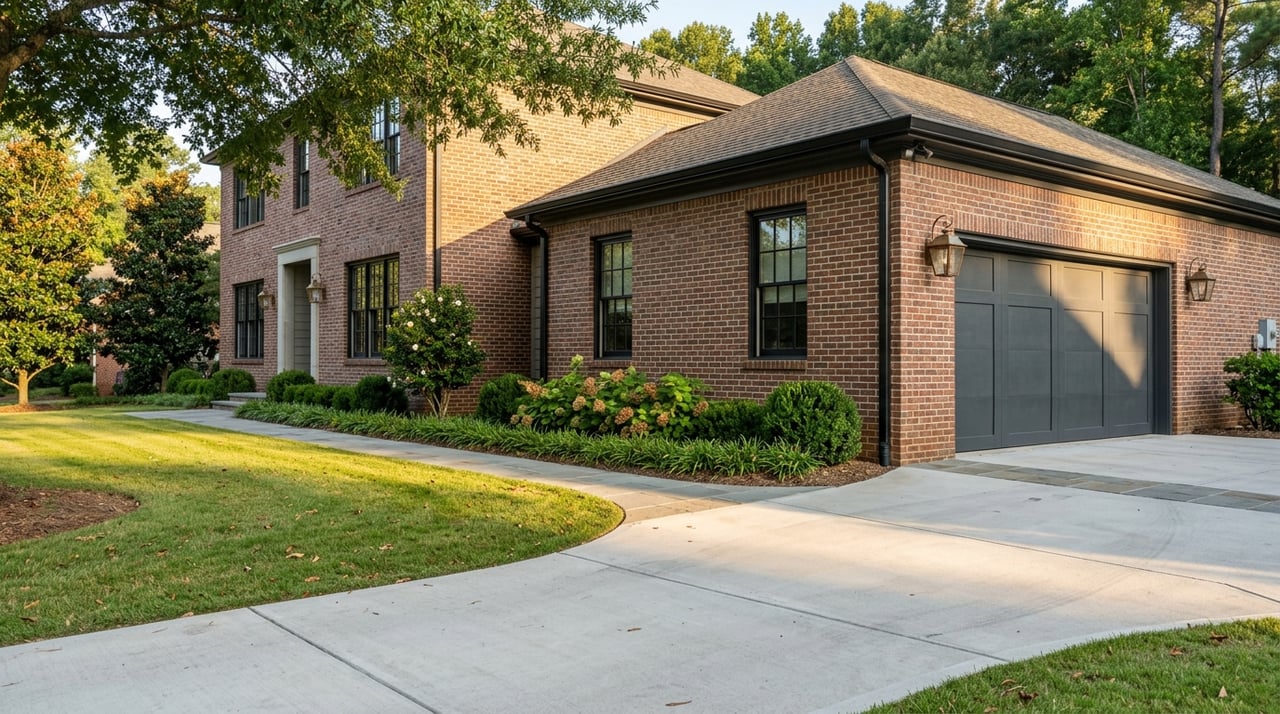
Living In Marietta And Commuting To Atlanta: What To Know
June 4, 2026
June 4, 2026
If you want more space without losing access to Atlanta, Marietta often lands on the shortlist for good reason. You may be trying to balance commute time, home style, and day-to-day convenience all at once, and that can make the search feel more complicated than it looks on a map. The good news is that Marietta offers several workable paths into Atlanta, plus a local core that feels more established than many outer suburbs. Let’s break down what to know before you choose where to live.
Marietta works well as a commuter base because of its location along the I-75 and Cobb Parkway corridor. The city also has stronger transit structure than many suburbs farther out, with CobbLinc routes, a free circulator, microtransit, and park-and-ride lots centered around the Marietta Transfer Center and Cumberland Transfer Center.
Just as important, Marietta gives you more than a launch point for work. Marietta Square serves as the city’s central gathering place, and the city describes downtown as offering convenient access to Atlanta while still keeping a small-town environment. If you want a commute option and a place with its own identity, that combination is a big part of the appeal.
Your experience in Marietta depends a lot on where you work in Atlanta. Some job centers connect more naturally to Marietta’s transit network, while others are more car-dependent.
Midtown is one of the clearest fits for a Marietta commuter. CobbLinc Route 10 connects the Marietta Transfer Center to MARTA Arts Center Station and also serves Atlantic Station, Cumberland Mall, Cumberland Transfer Center, Dobbins, and KSU-Marietta Campus.
On the current weekday schedule in the research provided, one morning Route 10 trip leaves the Marietta Transfer Center at 5:00 a.m. and reaches Arts Center at 5:47 a.m. Once you reach MARTA, Midtown Station serves offices, shops, restaurants, and cultural institutions, making this one of the more direct transit patterns from Marietta into Atlanta.
West Midtown is also a strong match. MARTA Route 12 runs along 10th Street, Howell Mill Road, Northside Parkway, and Akers Mill Road, with points of interest on the corridor including Georgia Tech, Westside Provisions District, and The District at Howell Mill.
That matters because Route 10 gets you to Arts Center and also reaches Atlantic Station. Depending on your exact office location, you may be able to use the Midtown side, the Atlantic Station area, or a Cumberland-side connection to make the trip work.
Buckhead is workable, but it usually involves more transferring. A common pattern is taking CobbLinc Route 10 to Arts Center and then using MARTA Route 110 northbound toward Buckhead Station or Lenox Station.
According to MARTA’s station profile, Buckhead Station is on the Red Line and sits 12 minutes from Midtown and 16 minutes from Downtown. That gives you a path into Buckhead, but compared with Midtown, the commute tends to be less simple and more connection-dependent.
Perimeter is usually the least straightforward commute from Marietta. Dunwoody Station serves the Perimeter area, and MARTA Route 150 connects destinations like Perimeter Mall and Dunwoody Village from that station.
Still, Marietta’s transit structure is more centered on Marietta, Cumberland, and Midtown connections. Based on the published route network in the research, Perimeter is generally the most road-heavy commute of the major Atlanta job centers covered here.
Marietta is not one-note, and that is part of its strength. Your commute and your housing style often go hand in hand, so the best part of town for you depends on how you want your daily routine to feel.
The city says Marietta includes five National Register Historic Districts, three locally designated residential historic districts, and a Downtown Marietta Historic District. That gives parts of the city a distinctly established feel, especially around the central core.
Marietta Square remains the local anchor. The city describes it as a place for festivals, concerts, markets, shopping, antiques, restaurants, museums, theatres, and parking, which helps explain why many buyers focus on areas with easier access to downtown Marietta.
If you picture Marietta as one uniform suburb, you may miss what makes it useful for different kinds of buyers. The housing mix ranges from more in-town options near the core to broader suburban neighborhoods along employment corridors.
Older downtown planning documents describe central Marietta as an eclectic mix of restored historic structures, single-family residences, small cottages, bungalows, and opportunities for townhouses and loft space. The city’s own overview also notes that downtown can range from small apartments and modest condominiums to larger upscale residences.
Marietta’s 2022 comprehensive-plan housing snapshot adds another layer. It says almost half of the city falls into suburban neighborhoods along employment corridors with a moderate-to-higher-priced mix of single-family and multifamily housing, while near-core and employment-corridor neighborhoods are higher priced.
For you, that means Marietta can support very different priorities. You may prefer an in-town feel with easier access to Marietta Square and transit connections, or you may want a more suburban setting with a different home style and street pattern.
The smartest way to evaluate Marietta is to start with your work destination, then layer in the lifestyle you want at home. Commute convenience, neighborhood setting, and housing type are closely tied here.
If your office is in Midtown or West Midtown, central Marietta is often the easiest balance. The research points to this area as a practical fit because it is closer to Marietta Square, the Marietta Transfer Center, and the Route 10 and Route 12 bus-to-MARTA pattern.
If you work in Buckhead, Marietta can still make sense. You should just go in expecting a commute that is more transfer-dependent by transit or more highway-dependent by car than a Midtown commute.
If you work in Perimeter, it is wise to plan around a more road-heavy routine. The destination itself has solid transit once you arrive, but the trip from Marietta is generally less direct.
No commuter city is perfect, and Marietta is no exception. The value comes from understanding what you are trading for what.
Here are the main tradeoffs to think through:
Marietta makes the most sense if you want a city with a real local center, a wider range of housing styles, and workable access to major Atlanta job hubs. It is especially attractive if your work pulls you toward Midtown or West Midtown and you want more neighborhood variety than many intown options can offer.
The biggest mistake buyers and renters make is treating all of Marietta the same. In reality, your daily experience can look very different depending on whether you live closer to downtown Marietta, along an employment corridor, or in a more suburban pocket of the city.
That is why a map search is only the starting point. The right choice usually comes from matching your office location, commute tolerance, and preferred home style to the right part of Marietta.
If you are weighing Marietta against intown Atlanta or other Northern Metro options, a local strategy can save you time and help you focus on the neighborhoods that truly fit your routine. For tailored guidance on where to live and how to balance commute, lifestyle, and long-term value, connect with Brandon Patterson.
Stay up to date on the latest real estate trends.

Brandon's goal isn’t just to help you buy or sell a house — it’s to guide you through a meaningful life transition with honesty, empathy, and precision. Whether it’s negotiating the best outcome, refining a property’s presentation, or simply listening deeply, his focus is always the same: your success and peace of mind.