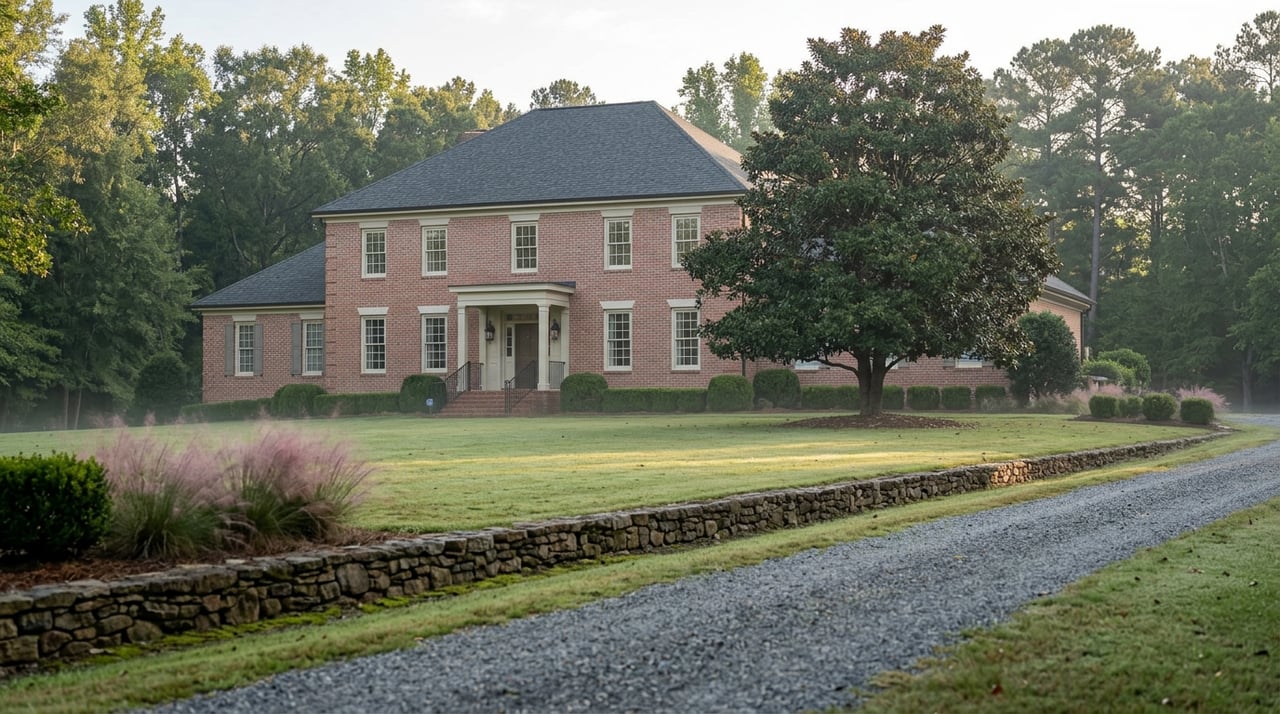
The Real Deadline on a Milton Septic Sale Isn't the One in Your Contract
September 17, 2026
September 17, 2026
Every Georgia purchase contract carries a due diligence period, usually seven to twenty-one days, during which a buyer can walk away for any reason and get their earnest money back. Buyers moving from a Midtown high-rise into a five-acre property off Freemanville Road tend to treat that window as full coverage: if nothing surfaces in those two weeks, they assume they're clear. In Milton, that assumption is where deals get expensive.
Georgia is a buyer-beware state. Sellers disclose what they know, but the burden to find what they don't fall on the buyer during that due diligence window, and only for what actually gets inspected. A general home inspector checks the roof, the HVAC, the electrical panel, the foundation. A standard inspection does not include a detailed evaluation of a septic system. On a property off Bethany Bend or in Bentgrass Farms, where the septic tank and drain field handle everything the county sewer line would handle anywhere else, that's the one system nobody looked at.
Almost every home in Milton runs on a private septic system rather than county sewer, and a meaningful share also draw drinking water from a private well rather than a municipal line. That's simply how a rural-character, equestrian community outside the sewer service area gets built. It also means the two systems most likely to hide a problem, and most expensive to fix, are the two systems a generic inspection contract quietly skips.
If a buyer doesn't specifically order a septic evaluation and a well water test during due diligence, the legal exposure shifts. Georgia law doesn't require the seller to volunteer an inspection wasn't requested, and once the due diligence period closes, the buyer's unilateral right to cancel closes with it. What a buyer finds during mortgage underwriting, weeks later, is a different negotiation entirely, one where they've already spent money on appraisal fees, locked a rate, and lost the easy exit.
Lenders don't let this slide indefinitely. FHA, VA, and USDA loans all require documented proof of a functioning septic system and, for private wells, a water test for bacteria, nitrates, and lead before they'll fund. That requirement doesn't disappear if a buyer skips it during due diligence. It just resurfaces later, on the lender's clock instead of the buyer's, at a point in the transaction where walking away costs a lot more than an inspection fee.
Milton's terrain adds its own wrinkle. The rolling hills and clay-loam soils across the Crabapple, Birmingham, and Deerfield areas percolate unevenly, and properties near Big Creek or Little River carry watershed considerations that flatter suburban lots don't. Estate and equestrian properties frequently support more than one structure on a single system, main house, guest house, barn, which means larger tanks, more baffles, and sometimes an advanced treatment unit rather than a simple gravity system. None of that is unusual for a five-bedroom property on multiple acres. It does mean the inspection takes longer to schedule and longer to interpret than a routine pump-and-look at a smaller lot, and a rushed due diligence timeline compresses exactly the part of the process that needs the most time.
There's a financing-specific version of this problem too. VA loans require at least 100 feet of separation between a well and a septic system, a rule meant to keep effluent from reaching the drinking water supply. On Milton's larger new-construction lots that's rarely an issue. On older parcels, particularly smaller acreage tracts that predate the current lot sizes around White Columns Country Club and the Hopewell Road corridor, a well and septic system installed decades apart can end up closer together than a VA appraiser will accept. Fixing it means relocating the well or the system, work that typically runs from five figures at the low end, or pursuing a variance through Fulton County's Environmental Health office if the geology supports one. That's a conversation worth having before a VA buyer writes an offer, not after the appraisal comes back.
The sellers who avoid all of this simply don't wait for a buyer's inspector to find the problem first. A pre-listing septic inspection typically costs $450 to $800, including a pump-out, and produces a written report before the property ever goes on the market. Compare that to the same finding made by a buyer's inspector under contract: a cracked lid or a degraded baffle that would have cost a few hundred dollars to fix quietly becomes a repair demand, a credit negotiation, or a delayed closing. Same defect, completely different leverage, depending entirely on who finds it first.
The other piece worth pulling before listing is the property's as-built record from the Fulton County Board of Health Environmental Health Services office, which permits and inspects onsite sewage systems throughout areas of the county without public sewer. That record shows where the tank and drain field actually sit and confirms the system was permitted in the first place, something that matters more on older Milton parcels where no drawing may exist at all. County Environmental Health Performance Evaluation Reports, sometimes referred to by their form number, are treated as the standard documentation in a Georgia septic transaction, and having one ready before a buyer asks turns a potential objection into a settled fact.
Sellers preparing an equestrian or estate listing should also budget time. A tank has to be pumped before it can be properly inspected, records need to be requested from the county in advance since turnaround isn't instant, and a well water sample has to go through lab analysis rather than a same-day test strip. None of this is exotic. It's simply a longer runway than a typical intown listing needs, and starting it before the property is photographed rather than after an offer is signed keeps the seller in control of the timeline instead of reacting to a buyer's.
For a buyer moving from Buckhead or West Midtown into a Milton acreage property, the practical fix is straightforward: order the septic inspection and, if applicable, the well water test on day one of due diligence, not day ten. Ask the seller directly whether a county as-built record exists and whether the system has been pumped recently. If the loan is VA-backed, confirm the well-to-septic distance early enough that a variance or relocation, if needed, doesn't become a closing-week surprise.
For a seller listing a horse property or five-acre lot anywhere from Crabapple to the Bethany Bend corridor, the value of a pre-listing septic inspection isn't really about the $450 it costs. It's about deciding, on your own schedule, whether a defect gets fixed quietly before a buyer ever sees the report or negotiated loudly after they do.
Does Georgia require a septic inspection before a home can be sold? No. There's no statewide mandate. The requirement functions in practice because FHA, VA, and USDA lenders won't fund a purchase without proof the system works, and most conventional buyers request one anyway during due diligence.
What happens if the well and septic system are closer than 100 feet on a VA appraisal? The property won't meet VA minimum property requirements as-is. Options include relocating the well or septic system, which can run into five figures, or requesting a variance from Fulton County if the local geology supports a shorter distance.
Who typically pays to fix a septic issue found during due diligence? It's negotiable, but timing drives the outcome. A defect a seller discloses or fixes before listing rarely becomes a price issue. The same defect found by a buyer's inspector under contract usually becomes a credit or repair request, because the buyer's unilateral right to walk away gives them the stronger hand at that point.
Septic and well systems aren't the most exciting line item on a Milton listing, but they're often the one that decides whether a fall closing happens on schedule or slips into a second round of negotiation. If you're preparing to list an estate or equestrian property, or you're under contract on one and want a second set of eyes on the timeline before your due diligence period runs out, Brandon Patterson & Company can walk through what to order, in what order, and by when. Request a private consultation before the clock starts, not after.
Stay up to date on the latest real estate trends.



Brandon's goal isn’t just to help you buy or sell a house — it’s to guide you through a meaningful life transition with honesty, empathy, and precision. Whether it’s negotiating the best outcome, refining a property’s presentation, or simply listening deeply, his focus is always the same: your success and peace of mind.